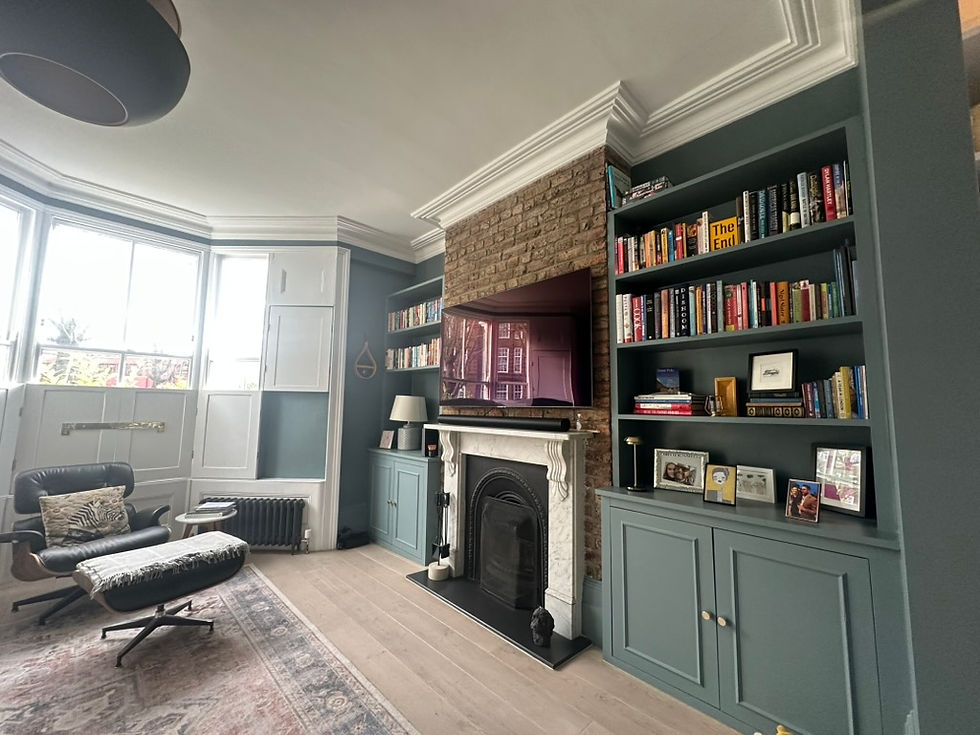
Everything you need to know about modernising a Victorian or Edwardian home without losing its character

You’ve bought the period property of your dreams and moved in, but now realise that the Victorian charm you fell in love with is hiding below many layers of (possibly leaded) paint, peeling wallpaper and layouts that aren’t practical for modern family life. You now have the task of modernising a Victorian or Edwardian home.
Did you make a mistake? Should you have bought a new build off-plan?
“Noooo!” you may hear me shout. And here’s why.
It’s fair to say that period homes often need more care and attention than modern houses, but with careful planning you will be rewarded with a family home that you will never want to move from.
First of all, let’s work out exactly what kind of home you have.
A Victorian property is a house built during the reign of Queen Victoria (1837–1901), and is often characterised by distinctive features like high ceilings, sash windows, ornate fireplaces and brick construction.
An Edwardian property is a house built during the reign of King Edward VII (1901–1910), though often extending to 1914, and is characterised by lighter, wider, and less ornate designs compared to Victorian homes.
The two often get confused, but the best way to check is to look at the deeds of your house. This, in itself, can be an interesting exercise in learning something about the history of your house. You may be able to find out who the first owner was and who built the property. All of this may influence the design choices you make.

Planning ahead when modernising a Victorian or Edwardian home
While I care deeply about preserving period features, I’m more concerned with making homes habitable for 21st Century living. Approaches to heating and lighting were very different back in the 19th Century as was glazing and most period homes were not built with garden views or open-plan family spaces in mind. This is where an architect or an interior designer may be needed to help you to reimagine the space for your specific needs.
Could you knock through between the kitchen (probably small) and the dining room (most likely quite large)? If you have a garden, could you add glazing to give yourself a view?
Even if you don’t have the funds to make big changes right away, it’s always worth doing the bigger picture thinking early on so that any small changes you make aren’t going to be a waste of time and money if you decide to make structural changes further down the line.
An example: you hate the laminate flooring in the hallway and living room and want to change it to characterful wood as soon as you move in. But, you do have an inkling of a plan that you want to extend in 3 years’ time. Should you change the flooring in the hallway and living room?
My advice would be to change it, yes, because 3 years is a long time to be living with something that you dislike and isn’t working. But what you really must do is try to think ahead and imagine what the flooring of the extension is going to be.
Do you envisage the same wood floor throughout the whole of the downstairs? If so, you will need to choose a wood floor in the hallway and living room that you know you will still be able to get in 3 years’ time or even buy the full amount in one go if you have space to store it. Wood changes colour in light and so you may also have to factor in 3 years’ worth of discolouration.
All of this might lead you to decide to go with different materials, but the key point here is that you are considering the bigger picture rather than making changes in a piecemeal way.
How do you know which period features to keep and which to remove?
There’s no easy answer to this question, and function must always be considered, but I would suggest you look around and observe what details you have: skirting boards, cornicing, fireplaces, ornate staircases, corbels, picture or dado rails… and then think about whether any of those things are in your way or stopping you from living how you ideally want to.
For example, is there a fireplace and chimney breast in a room that means you struggle to know where to put furniture? If so, you might explore the costs to have this removed. This might be the case in a bedroom or dining room, but probably less so in a living room where a fireplace provides a focal point. In period properties, fireplaces tend to be more ornate in the main living room and smaller and less detailed in other rooms, so you might choose to keep the fancy one but remove others to make the rooms more practical.
But…once you’ve removed something there is no going back, so proceed with plenty of thought and care!
If you’re renovating or planning to, you need my free guide: Room Design Simplified which takes you through 5 easy steps to creating a beautiful room. Get it here:
My best advice to leave you with is to make the most of any decorative detail through the use of colour. Don’t be afraid to paint deep skirting boards a colour other than white. Explore painting the ceiling and area above the picture rail (if you have one) in the same colour to emphasise the height of the room. Paint your front door a striking colour which picks out a detail in the stained glass, if you have it.
And it’s always worth peeking underneath old carpet, just in case you are the lucky owners of some long covered but beautiful tiles. It’s rare, but it does happen and that's the fun of modernising a Victorian or Edwardian home!
Show me your period home by sending a photo to info@hannahashe.co.uk and telling me about it.
I’m a period home fanatic and love to see inside houses of these periods. I’ll choose one photo to feature in a future blog post with some tips on how to make the most of the features.
Alternatively, if you're looking for help immediately, why not book a video interior design consultation with me:

Hannah Ashe is an interior design expert and founder of Hannah Ashe Interior Design, bringing colour, confidence and calm to homes across London and Surrey. After years of renovating homes and a career in music - where she developed a keen appreciation for rhythm, texture and harmony - she brings a fresh, creative perspective to interior design. Whether offering practical renovation planning or bespoke design support, Hannah helps clients feel confident and inspired at every stage of their project.