


Victorian vs Edwardian Homes: What's the Difference and Why Does It Matter for Decorating?

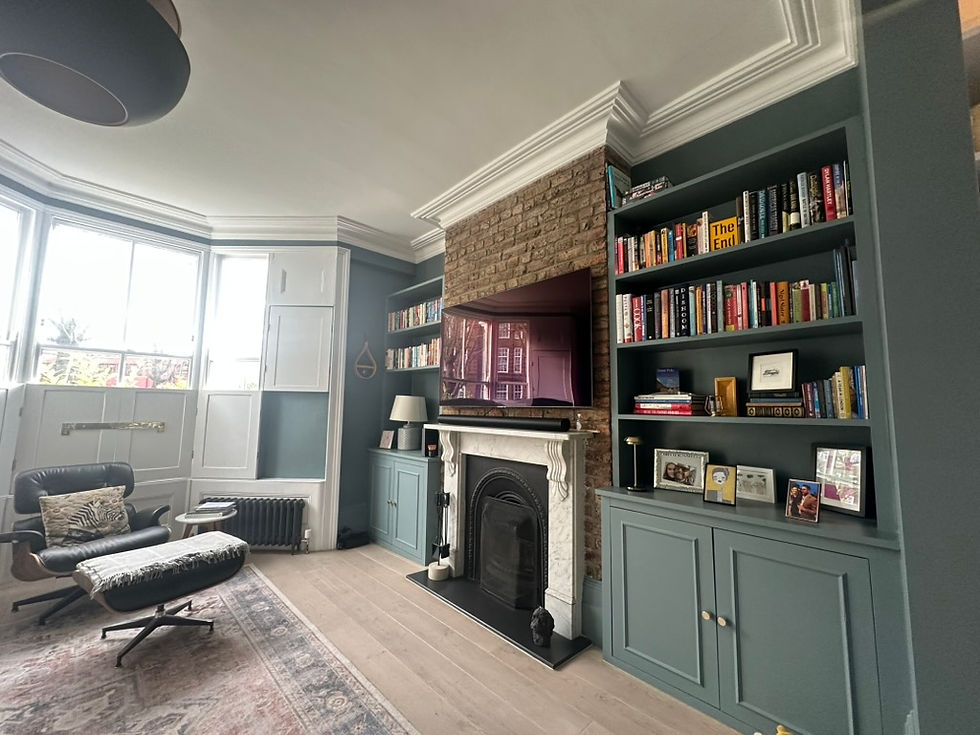
If you own a period home in SW London or the wider South East, chances are someone has described it as "Victorian or Edwardian" in the same breath - as if they were essentially the same thing. They're not, and understanding the difference can transform how you approach decorating and renovating your home.
What is a Victorian home?
A Victorian property is one built during the reign of Queen Victoria, which ran from 1837 to 1901. That's a long period, which is why Victorian homes vary more than people expect - early Victorian terraces look quite different from late Victorian villas. But across the era, certain features tend to recur:
Steep roof pitches and asymmetrical facades
Ornate brickwork, often with decorative detailing around windows and doors
Sash windows, typically narrower than those found in later homes
High ceilings with elaborate cornicing and ceiling roses
Tiled hallways, particularly in the later Victorian period
Deep skirting boards and picture rails
Ornate fireplaces as focal points in principal rooms
Darker, more enclosed layouts - rooms led off a central hallway with little sense of flow between them
Many terraced homes in SW London neighbourhoods like Tooting, Balham, Streatham and Clapham are Victorian, often built to house the growing middle classes who commuted into the city on the new railway lines.

What is an Edwardian home?
Edwardian properties were built during the reign of King Edward VII (1901–1910), though the term is commonly used to describe homes built up to around 1914. Despite covering a much shorter period than the Victorian era, Edwardian homes have a very distinct character:
Wider, lighter rooms with larger windows
Less ornate detailing - cleaner lines and simpler mouldings
Greater garden orientation - Edwardian homes often had bigger gardens and more connection between house and outdoor space
More generous hallways and entrance vestibules
Pebbledash or roughcast render on exterior walls in some styles
Bay windows, often on both ground and first floors
Stained glass in front doors and windows - typically more colourful than Victorian equivalents
Edwardian housing was also influenced by the Arts and Crafts movement, so you sometimes find beautiful handcrafted timber details, leaded light windows and a real emphasis on natural materials.

How to tell the difference quickly
If you're not sure which era your home is from, start with the deeds - the date of construction should be recorded there, and you may even discover who built or first owned the property, which can be fascinating context for your design decisions.
But if you want a quick visual check, here's a simple rule of thumb: Victorian homes tend to feel darker and more intricate; Edwardian homes tend to feel lighter and more spacious. Step through your front door and ask yourself which word better describes the space. It won't tell you the exact decade, but it'll usually point you in the right direction.
The scale and style of the fireplaces can also be a giveaway. Victorian fireplaces - particularly in principal rooms - tend to be more elaborate, with cast iron inserts, tiled surrounds and carved wooden or marble mantels. Edwardian fireplaces are often simpler and more geometric.

Why does the difference matter for decorating?
This is the real question, and the reason I think it's worth understanding which kind of home you have before you pick up a paint brush.
Colour choices are different. Victorian homes typically suit richer, deeper tones - forest greens, burgundy, inky blues, warm terracottas. These colours work with the darker bones of the house and make the ornate details sing. Edwardian homes, by contrast, respond beautifully to softer, airier palettes - sage greens, dusky pinks, warm whites and stone tones that amplify that sense of light and space.
The features you're working with are different. In a Victorian home, the decorative detail is often the whole point - deep cornicing, elaborate ceiling roses, picture rails that divide wall from ceiling. In an Edwardian home, the architectural interest often comes from the proportions and structure themselves: the bay window, the generous hallway, the relationship with the garden.
The renovation challenges are different. Victorian homes often need more thought around layout - those compartmentalised rooms can feel disconnected from modern family life. Edwardian homes tend to have better bones in terms of flow, but the larger windows and more open feel can make heating and glazing more of a consideration.
Understanding your home's era means you can work with it rather than against it.
Getting the most from your period home
Whether you have a Victorian terrace in Tooting or an Edwardian semi in Twickenham, the principle is the same: the best results come from understanding what you have, being intentional about what you change, and making sure any updates honour the spirit of the original.
That doesn't mean living in a museum. It means creating a home that feels liveable in 2026 while holding onto the character that made you fall in love with it in the first place.
Not sure where to start?

If you'd like to talk through your period home - whether you're trying to understand its character, planning a renovation, or just want to feel more confident about your colour and design choices - I offer a Rapid Revamp: a focused one-hour video call where we work through your specific space together. It's a great place to start.
For more in-depth support, I also offer Design Spark and Full Service Design across London and the wider South East. Every in-person project begins with a free discovery call - no commitment, just a conversation about your home and what you're hoping to achieve.
You might also enjoy:


