What's Under Your Feet? A Guide to Original Period Home Wood Floors

Every period home renovation reaches the same moment. The carpet comes up, and you hold your breath.
Sometimes it's the dream - boards in remarkable condition, just waiting for someone to come along and rescue them. But more often, it's complicated. As an interior designer specialising in Victorian and Edwardian homes in London and Surrey, I spend a lot of time assessing what's under the carpet before any other decisions get made. The floor is the foundation of the whole room, literally and aesthetically.
Here's my honest guide to period home wood floors: what you're likely to find, how to assess what you've got, and how I approach the restore-or-replace question with my own clients.
What you're likely to find
Most period homes have timber floorboards. The key variable is species. Victorian and Edwardian houses of the less grand variety typically used softwoods - most often pine. If you're lucky enough to own a grander period property, you may find your floors are made of oak, or an exotic hardwood. Later properties, particularly those from the interwar period, are more likely to have oak or other hardwoods. Parquet floors also appear in hallways and ground floor reception rooms, particularly in 1920s and 1930s houses.
Species matters because it tells you a lot about what the floor will look like once sanded back, and how it will perform long-term.
The question I always ask first
Before I think about finishes or colours, I ask: is this floor practical for modern living?
That means two things. First, warmth. Original floorboards, particularly softwood, can develop significant gaps over the years. Draughts rise through those gaps and the house loses heat. That's not just uncomfortable - it's expensive. Second, aesthetics. Once sanded and refinished, will this floor actually be beautiful? A floor can be technically restorable without being worth restoring.
If you'd like to talk through your own floors, get in touch.
My own Edwardian home
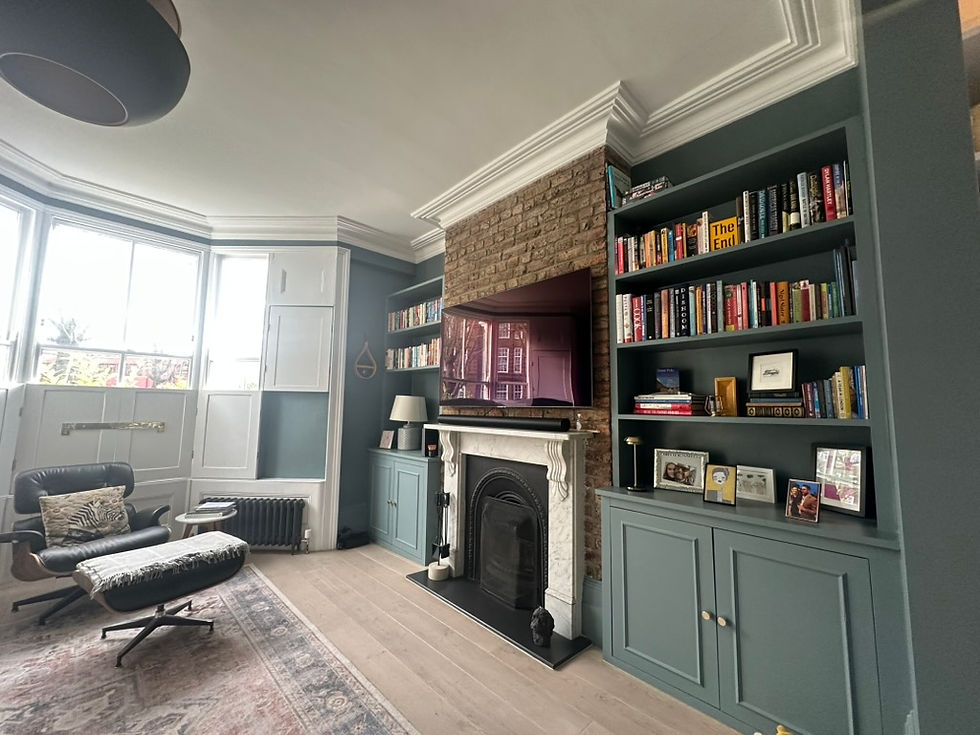
I bought my Edwardian semi in SW London knowing it needed work. When we looked at the original pine floorboards, the verdict was clear. The wood quality was poor, the gaps were considerable, and the house was losing a huge amount of heat through the floor. We made the decision to replace with an engineered oak floor laid over insulating underlay.
What that gave us was a seamless flow through the whole of the downstairs and a noticeably warmer house. Engineered oak also performs better than solid wood in older properties where humidity and movement are a factor. The original boards weren't worth saving, and we didn't pretend otherwise.

When restoration is the right call
In a recent project - a beautiful 1930s cottage in Hertfordshire - I walked into the kitchen and living room and knew immediately these floors had to be kept. The boards are oak. The grain is exceptional. Yes, there's water damage in the kitchen, woodworm in the living room, and gaps throughout. But the quality of the wood is obvious, even under years of wear.
We're working with a specialist to assess the full scope of restoration, and testing different areas to see how the floor responds to sanding and various finishes. This is not a job for someone with a hired sander and good intentions. If you're in London or the South East, I'd recommend Toby Newell - he really knows what he's doing with period floors.
Restoration won't always be cheaper than replacement. But for a floor like this, it's the right approach. Environmentally, there's no question. A floor that has been standing since the 1930s has already done its carbon work. Ripping it out and sending it to landfill when it can be restored to last another 90 years is hard to justify.

The sustainability point
It's worth pausing on this, because I think it changes how you approach the decision. Before you replace anything in a period home, ask yourself where the material is going. If it can be repurposed or recycled, the impact is lower. If it's heading to landfill, think carefully about whether restoration is possible. It won't always be the answer, but it should always be the question.
The bottom line
Original period home wood floors are worth keeping when the wood quality is genuinely good and the floor can be made practical for modern living. If you've got oak, assess it properly before making any decisions. If you've got pine in poor condition with significant gaps and heat loss, be honest about whether restoration will give you a floor you'll love for the next 20 years.
There's no single right answer. But there is a right process, and it starts with looking closely at what you've actually got.
I'm Hannah Ashe, an interior designer specialising in Victorian and Edwardian homes supporting clients in making considered choices about how best to preserve , or thoughtfully reinterpret, the character of their properties. Take a look at my portfolio, or if you'd like to talk through a project, visit my services page or drop me a line at info@hannahashe.co.uk.