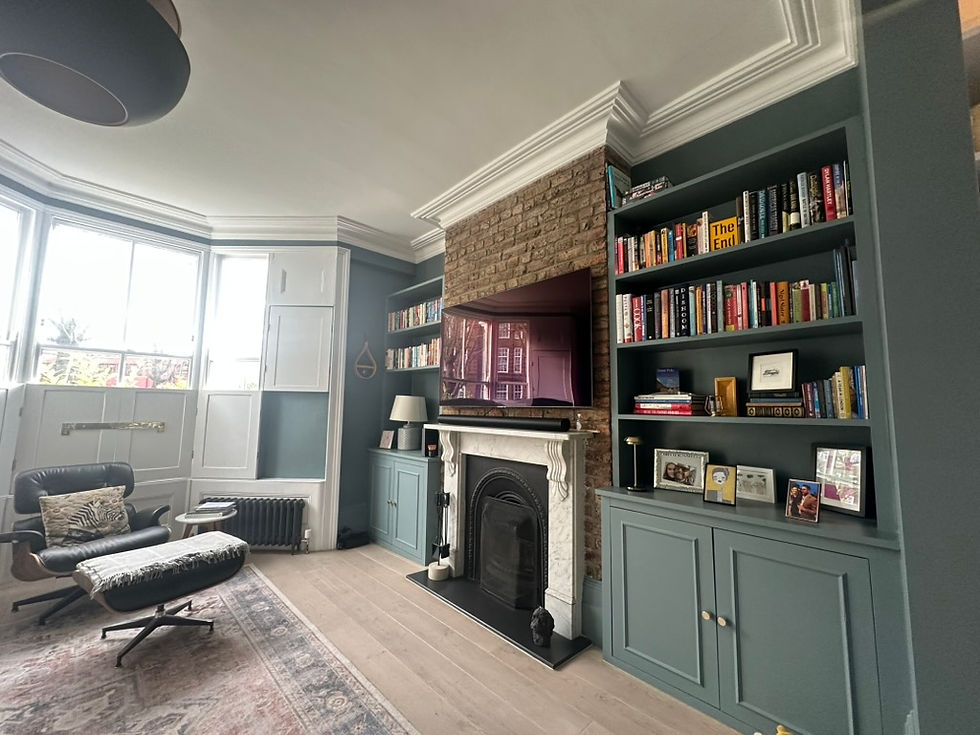
Why I kept a fireplace that made no sense to keep

Back in 2018, my SW London Edwardian semi-detached house was renovated from top to bottom. We'd moved in the previous year and lived in what felt like a very dusty museum for several months before embarking on the work.
The living room was one of the rooms to get a full makeover, but there was something about this fireplace that I knew I wanted to keep.

The gas fire was condemned after it set the carbon monoxide alarm off. 2017 was a very cold winter and the drafty floorboards, single glazing and pathetic radiator did not make for a warm time in this room. I couldn't wait to change all of that, but knew it was important to retain period character where it was still relevant.
The surround looked dirty and dated in stripped pine. The chimney breast behind it, once we got the fire out, was a mess of old brick, soot stains and cracked plaster. We were replastering the whole room, relaying the floor, moving sockets and eventually installing a wood burner.
The easy decision would have been to rip the surround out and start again with something new, but I didn't want to do that and annoyed the builders by insisting the surround was kept (and therefore moved from room to room while work continued throughout the house).
What was wrong with it
The chimney was stripped back to bare brick in places. You can see the old soot staining still baked into the brickwork, the marks of a fire that had been in frequent use for over a century. The opening itself was uneven, the old hearth was tired, and there was no working flue.
The structural work
It took ages before anything cosmetic (aka fun) happened, but it was worth the wait. The chimney breast was stripped and re-plastered with the opening squared off properly.
A fireplace specialist lined the chimney and installed a proper flue so the stove could be fitted safely. A new concrete hearth went in, and once that had cured, the new engineered oak flooring (more on that in my flooring post) could be laid throughout the room ready for the slate hearth to sit on the top.
I painted the room myself in Little Greene's 'Juniper Ash' with white skirting boards to match the new finish off the saved fireplace surround. I'll be honest, if I was to re-decorate this room, which I may do soon, I might be tempted to paint the surround and skirting boards a different colour, but that's a blog post for another day!
✨Want more like this delivered weekly to your inbox? Sign up for my free newsletter here✨
Keeping the surround
The surround itself came off early on and was stored out of the way (e.g. moved from room to room repeatedly) while all this structural work happened around it. It's not a rare or hugely valuable piece, it's a fairly typical tall Edwardian pine surround with a dentil moulding on the cornice and two flat recessed panels. But it was original to the room (as far as I know), it was in good structural condition, and it suited the proportions of the space in a way no off the shelf replacement was going to.
So once the room was painted, I set to work on it myself. Sanding back the old finish, then painting it in stages. The primer and first coats went on before it was reattached to the wall - easier to get into the mouldings and panel recesses when it's lying flat rather than fixed upright. The final coat went on once it was back in position, to blend any marks from handling and fixing.
The stove was then installed on the new slate hearth, inside a surround that's still doing the job it was built to do well over a hundred years ago.

Why this matters if you have a period home
I see decisions like this coming up regularly with clients. An old fireplace looks tired, or doesn't suit a new stove or fire, and the instinct is to replace it wholesale. Sometimes that's the right call, if the surround is structurally unsound, or was never right for the room to begin with, or has been damaged beyond sensible repair.
But often the surround isn't the problem. The fire within - gas, electric or open may be problematic or maybe the tiles look dated (especially if they've been replaced in the 70s or 90s).
The timber or marble surround around it can frequently be saved, and saving it keeps a piece of the house's actual history in the room, rather than a modern reproduction of it.
The questions worth asking before you commit to replacing a period fireplace:
Is the surround structurally sound, or is it cracked, rotten, or missing sections beyond simple repair?
Is the problem actually the fire or flue behind it, rather than the surround itself?
Does it suit the proportions and period of the room, or was it a later, mismatched addition?
Can it be stripped and repainted or refinished rather than replaced?
If the answer to the last two is yes, it's usually worth the extra time.
If you're weighing up a similar decision with your own fireplace, or any other original feature you're not sure whether to keep, that's exactly the kind of thing I help clients work through in a Rapid Revamp video consultation or a Design Spark project.

I'm Hannah Ashe, an interior designer specialising in Victorian and Edwardian homes supporting clients in making considered choices about how best to preserve, or thoughtfully reinterpret, the character of their properties. Take a look at my portfolio, or if you'd like to talk through a project, drop me a line at info@hannahashe.co.uk.